Skip to content

Camino guide

Life on the Camino: beds, shops and the customs nobody explains

What an albergue actually costs, what a village of forty people does and does not have in it, why every bar closes at two, and the small rituals that make the walk what it is. None of it is on the waymarks.

Where you sleep

Almost everyone sleeps in an albergue — a pilgrim hostel, bunk beds in a shared room, open only to people walking with a credencial. They are not all the same thing, and the differences matter more than the price.

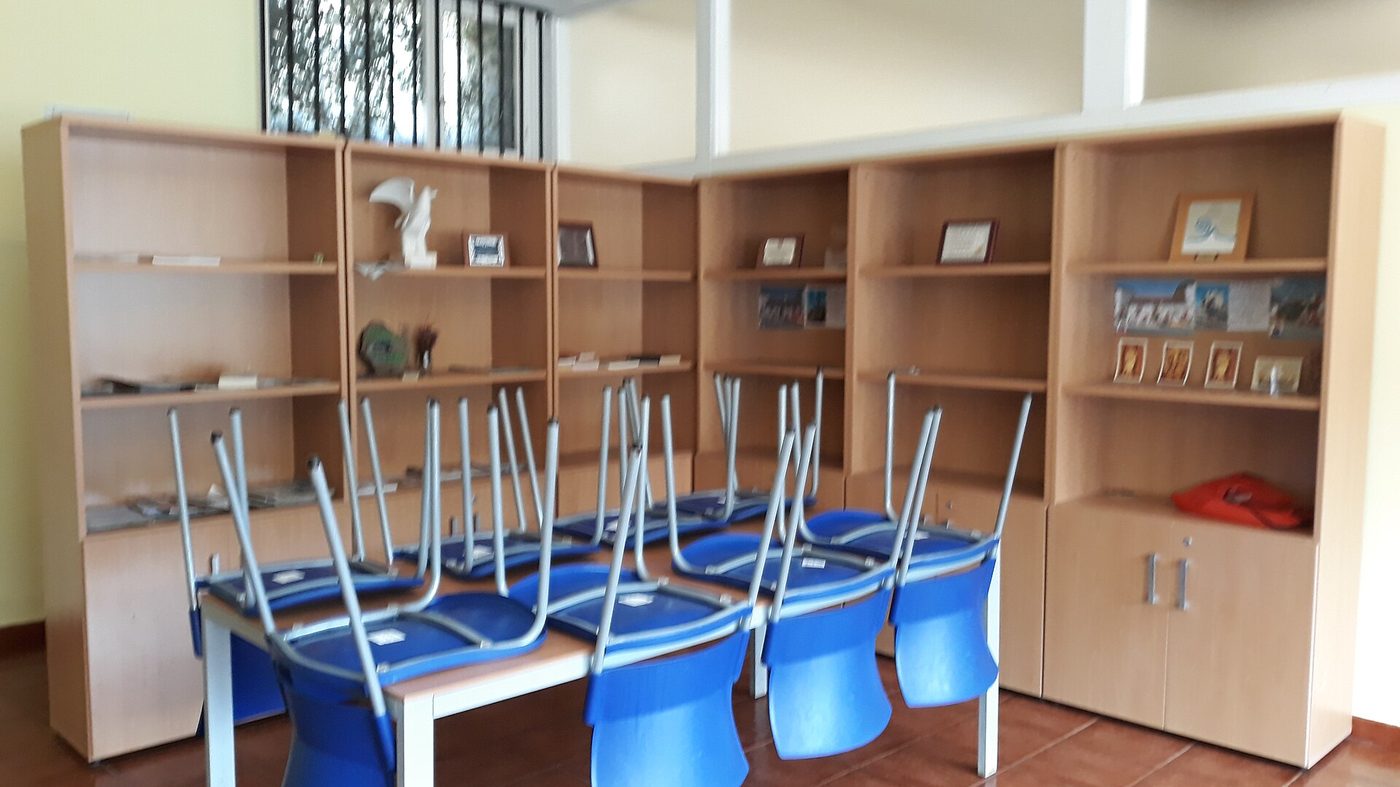
A pilgrim albergue dormitory
Photo: Simon Burchell · CC BY-SA 4.0 · via Wikimedia Commons

Municipal

€8–12

Run by the town. Basic, clean, large dorms, rarely bookable — you turn up and take what is left. Usually the cheapest bed in the village and often the one with the best terrace.

Parroquial

Donativo

Run by a parish or a confraternity, frequently by volunteers who walked it themselves. You pay what you think it was worth into a box. Many hold a communal dinner and a blessing; some ask that you help wash up.

Private

€12–25

Smaller rooms, better mattresses, a washing machine, and — decisively on a hot stage — the ability to book ahead. The default on the Norte and the Portugués in summer.

Pensión, casa rural, hotel

€35–80

A private room and a door that shuts. Worth it every fourth or fifth night; the sleep you get is a different kind of sleep, and there is no shame in it.

The unwritten rules

Doors typically open in the early afternoon and lights go out around ten; most albergues put you out by eight the next morning, because they have to clean before the next forty people arrive. Boots come off at the door. Plastic bags at 5am are the single most resented sound on the Camino — pack the night before if you plan an early start.

You need a credencial — the pilgrim passport — to be given a bed at all. Buy one at your starting point, at a cathedral, or from a confraternity at home. It is also what you fill with stamps, and what you hand in at the end for the Compostela.
What a village actually has

A Camino village of forty people can still have everything you need, and a village of four hundred can have nothing open. This is what the words on the signs mean.

Bar / cafetería

The centre of everything. Coffee, a tortilla, a bocadillo, the toilet, the wifi password, and — in the smallest places — the shop, the post point and the phone. If a village has one building open, it is this one.

Supermercado / tienda

Día, Eroski, Gadis and Froiz in the bigger towns; a single room with a bead curtain in the small ones. Fruit, bread, cured ham, the day's water. Cash is still king in the small ones.

Panadería

Bread in the morning, and gone by lunch. Worth the detour on a stage that starts with 15 km of nothing.

Farmacia

The flashing green cross. Spanish pharmacists deal with pilgrims all summer and are genuinely good on blisters, tendonitis and what you can take for it. Compeed by any other name is here.

Correos

The post office, and more usefully the people who run the pilgrim bag-transfer service — leave your pack at reception in the morning and it is at tonight's albergue when you arrive.

Cajero

The cash machine, and often the only one for three villages. Small albergues, donativos and village shops frequently do not take cards.

The two hours that ruin plans

Most village shops shut for the afternoon, roughly two until five, and a good number close on Sundays entirely. If you arrive at a small place at three with nothing in your pack, you may be eating what the bar has. Buy tomorrow's food today.

Eating on the way

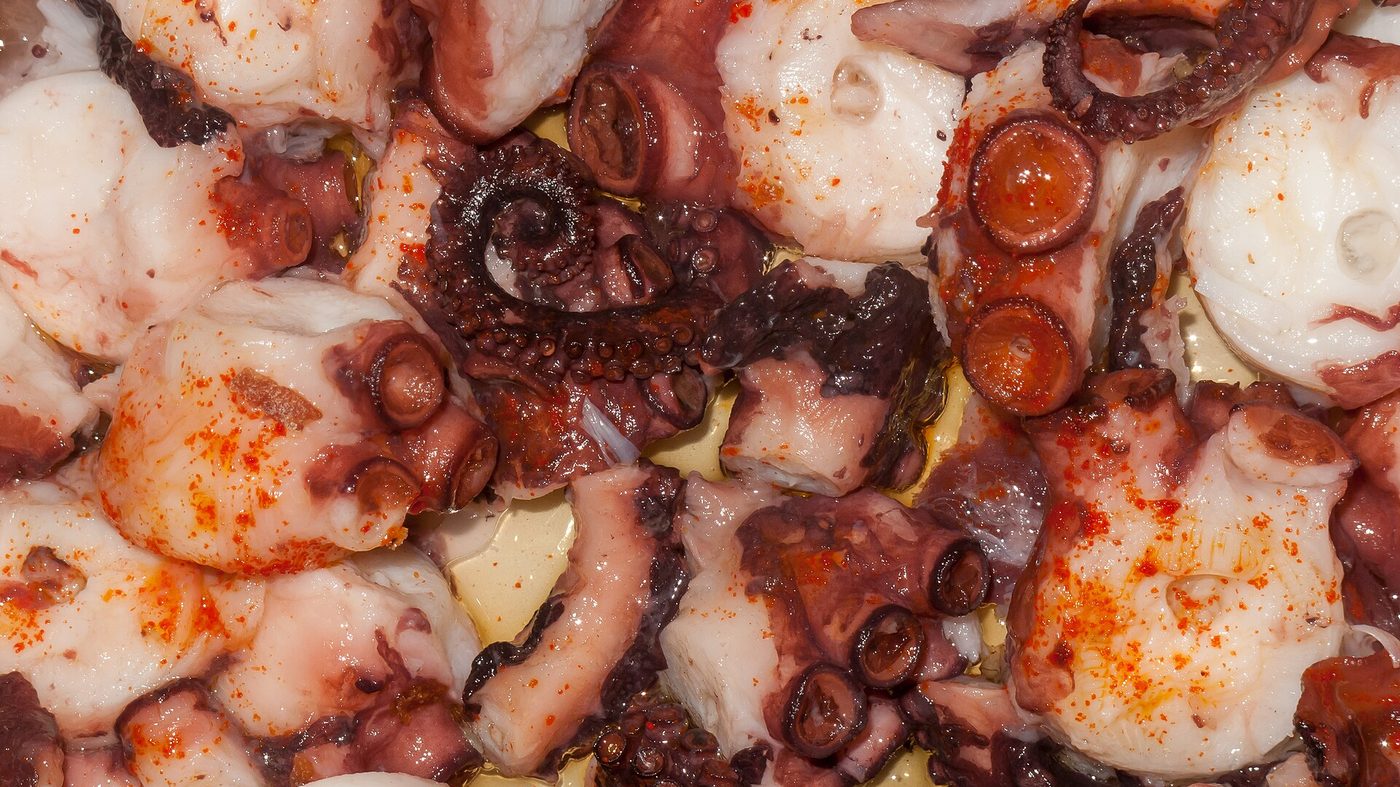
Pulpo á feira, octopus with paprika on a wooden plate
Photo: Luis Miguel Bugallo Sánchez (Lmbuga) · CC BY-SA 4.0 · via Wikimedia Commons

The menú del peregrino is the institution: three courses, bread and a bottle of wine for somewhere around €12–15, served early enough that you can be asleep by ten. It is rarely the best meal in Spain and it is exactly what you want after 25 km.

Breakfast is small — coffee and a pastry — and lunch on the trail is a bocadillo, a wedge of tortilla, and fruit. Regional things worth going out of your way for: pulpo á feira once you are in Galicia, cocido maragato around Astorga (eaten backwards, meat first), the pintxos of Pamplona and Logroño's Calle Laurel, and a slice of tarta de Santiago under its powdered-sugar cross at the end.

Customs and curiosities

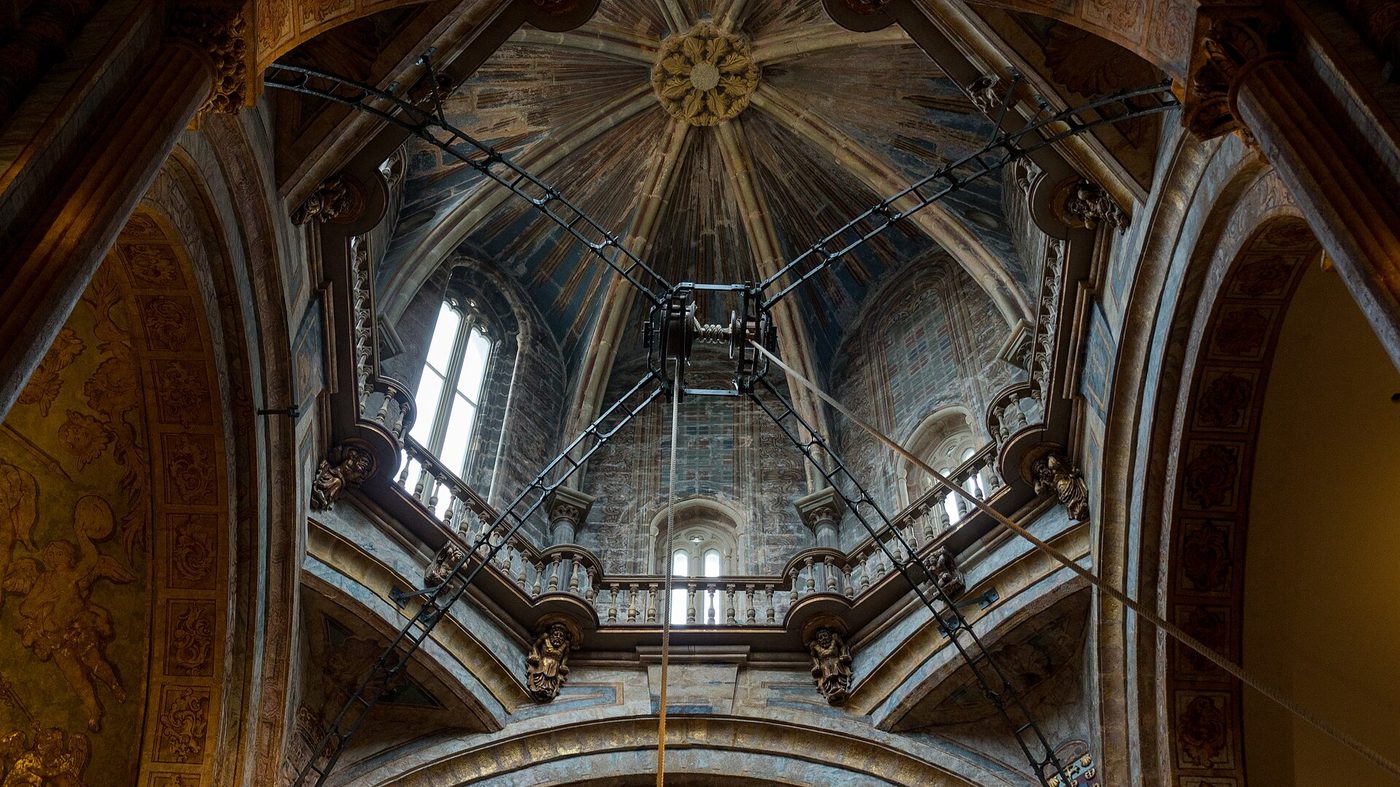
The dome and botafumeiro pulleys in Santiago cathedral
Photo: Fernando Pascullo · CC BY-SA 4.0 · via Wikimedia Commons

The yellow arrows were one man's idea

Elías Valiña, the parish priest of O Cebreiro, spent the 1980s driving the route with buckets of yellow road paint, marking it as he went. Every arrow you follow descends from that. He is buried beside his church, with a stone that carries an arrow.

The shell is a map, not a badge

The grooves of a scallop shell converge on one point, which is how it came to stand for routes converging on Santiago. Wearing one at the back of your pack is the oldest still-living pilgrim custom on the road.

Stamps are the currency

Albergues, bars, churches and even some cash machines will stamp your credencial. Two a day in the last hundred kilometres is what the Pilgrim's Office asks for, and the collection is the souvenir that actually survives.

The Botafumeiro does not swing daily

The giant censer in the cathedral flies at certain feasts and whenever a group pays for it. It takes eight men — the tiraboleiros — to work it, and the original reason for it was, plausibly, the smell of arriving pilgrims.

The Compostela has a distance rule

The last 100 km on foot, or 200 km by bicycle, with stamps to show for it. Sarria on the Francés and Tui on the Portugués sit just beyond the line, which is why both are so crowded.

Finisterre is not the end, officially

The route carries on 90 km past Santiago to the Atlantic, where pilgrims once burnt their clothes on the rocks. Burning things is now discouraged; watching the sun go down over the ocean after a month of walking east to west is not.

Worth an extra hour

Places where the stage schedule is worth breaking. Mostly on the Francés, because that is where most people are — the route pages carry the rest.

Roncesvalles

The first Spanish night, in a converted monastery, after the hardest day of the whole route. The evening pilgrim blessing here is where a lot of people realise what they have started.

Pamplona

The first real city. The bull-run route through Estafeta is walked in ten minutes and the pintxos bars around Plaza del Castillo are worth the late night you will regret.

Burgos

A Gothic cathedral so large it is a World Heritage Site in its own right, and the Museum of Human Evolution across the river holding the finds from Atapuerca.

León

Stained glass on a scale that stops people in the doorway — and Gaudí's Casa Botines a few streets away, which almost nobody expects to find on the Camino.

Astorga

A second Gaudí, the Palacio Episcopal, opposite the cathedral. Also the chocolate museum, and cocido maragato if you are hungry enough to eat it.

O Cebreiro

The climb into Galicia, ending in a hamlet of round thatched pallozas at 1,300 m. Arrive in cloud and it is the strangest night of the walk.

Samos

A working Benedictine monastery on a variant most people skip to save 6 km. The ones who take it tend to say it was the best decision they made.

Small practicalities

Send the pack ahead

Correos and several private operators move a bag between albergues for a few euros a stage. Not cheating — it is what keeps a lot of people walking through an injury.

Water is free and everywhere

Village fuentes are drinkable unless a sign says otherwise (agua no potable). Two litres in the heat, and top up at every one.

Wash tonight, wear tomorrow

Most albergues have a sink, a line and sometimes a machine. Two of everything is enough for a month.

Blisters, early

Treat a hotspot the hour you feel it, not that evening. Every farmacia on the route has seen worse than yours and will tell you what to do.

Book ahead where it is thin

The Norte, the Primitivo and the Portugués in summer. The Francés outside Sarria mostly still works on turning up.

Download the stage tonight

Offline maps and tomorrow's notes, while you have albergue wifi. It removes almost every problem a thin signal causes.

Plans for your route

Choose a route and we'll show only the plans that cover all of it.

All 27 routes, grouped by how busy they are.

Pick your Camino first

A Francés from Saint-Jean needs France as well as Spain; a Portugués needs Portugal. Tell us the route and the list below fills itself in.

Browse all routes